Opposition analysis
How to scout your next opponent using YouTube footage
If your next opponent has a match on YouTube, 45 minutes with it beats any rumour from the car park. A checklist, a routine and a three-point briefing.
By My Annotator · · 7 min read
A few years ago, scouting an amateur opponent meant driving to one of their games or asking around. Today a surprising number of clubs, leagues and local media put full matches and highlights on YouTube. If your next opponent has footage online, 45 minutes with it will tell you more than any rumour from the car park.
This guide covers where to find that footage, what to watch for when you don't have much time, and how to turn it into a briefing your players will actually use.
Where to find footage of your opponent
- The club's own channel. Search YouTube for the club name, and check the club's website and social media, which often link to it.
- League or association streams. Some leagues work with a streaming partner or publish highlights of every round.
- Your own past games against them. Often the most useful footage there is, because it shows how they played against you.
- Local sports media and fan channels, usually highlights rather than full matches.
Full matches beat highlights. Highlights show goals, and goals are the least typical moments of a game. You want the other 89 minutes: how they build, where they press, what they do when nothing is happening.
Use what's published for your own preparation and share it inside your squad. Don't download and re-upload other clubs' videos.
What to watch for: a scouting checklist
You won't answer everything from one match. Pick what matters most for how you want to play.
Shape
- How many at the back in possession, and how many out of it? Count at a goal kick and at a throw-in.
- Who drops in to build up: a centre-back, the 6, the goalkeeper?
- How high does their back line sit when the ball is in your half?
Pressing
- Do they press high, sit in a mid-block or drop deep?
- What triggers the press: a back pass, a pass to the full-back, a heavy touch?
- Where are the gaps when they press? Between the lines, behind the full-backs, on the far side?
Key players
- Who gets on the ball most when they attack?
- Is there one runner they always look for?
- Which foot does their best player prefer, and which way do they turn?
Set pieces
- Who takes corners and free kicks, and with which foot?
- Near post, far post or short? Where do their tall players go?
- How do they defend corners: zonal, man-to-man, or a mix?
Transitions and the goalkeeper
- When they lose the ball, do they counter-press or run back?
- When they win it, how quickly do they go forward, and through whom?
- Does the goalkeeper kick long, play short, or come for crosses?
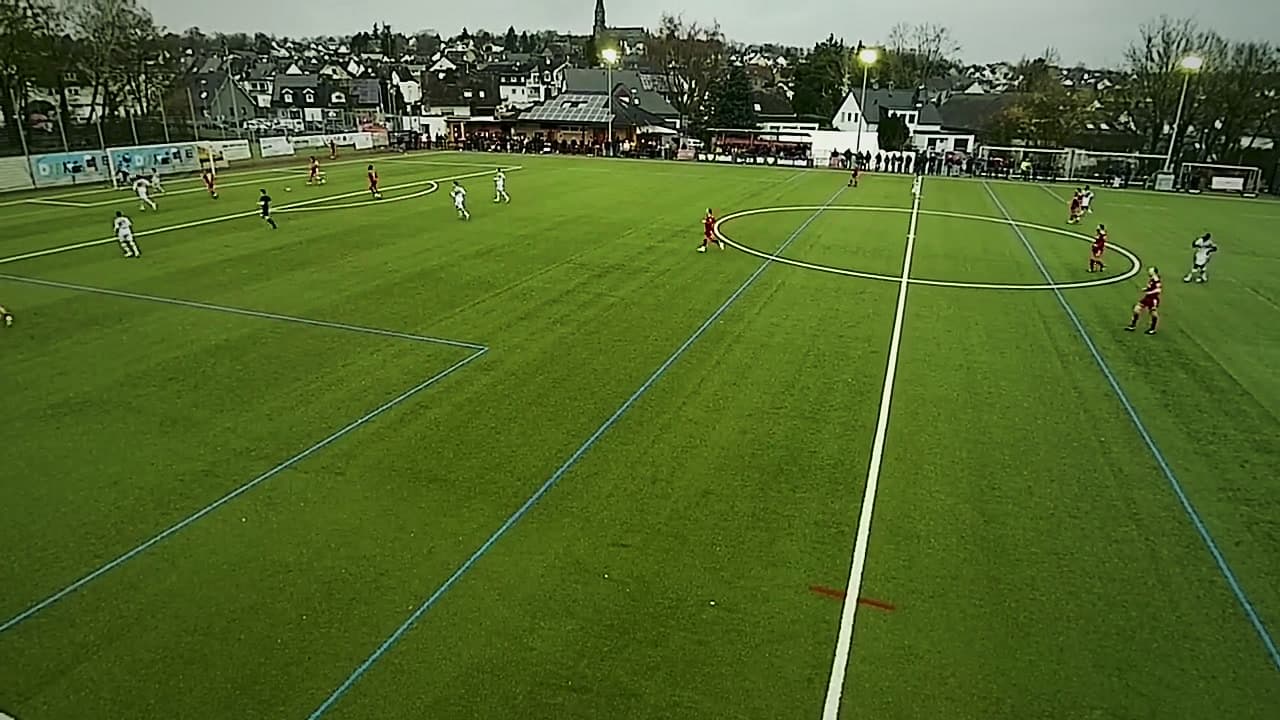
A 45-minute scouting routine
- 10 minutes, first half at 2×. Don't mark anything yet. Get a feel for their shape, their tempo and who's on the ball.
- 10 minutes on set pieces. Jump to every corner and free kick near the box. Note the taker, the delivery and the target.
- 20 minutes of focused scrubbing. Go back through with the checklist and mark 8 to 12 moments: their build-up, their press, their dangerous player, their transitions.
- 5 minutes to cut. Choose the three to five moments your players need to see. The rest are notes for you and your staff.
One match is a small sample. Opponents change line-ups, weather changes games, and the team you watch may have been playing a very different opponent. If you can, compare two matches. A pattern you see twice is worth briefing. Something you saw once is worth a mention, at most.
Turn it into a briefing players will use
Players don't need a dossier. They need three things they can recognise on Saturday:
- Where they can hurt us. “Their 11 always attacks the space behind our right-back. Our 6 covers.”
- Where we can hurt them. “They press the full-back with two. The pass inside to the 8 is free.”
- One set piece. “Their corners go to the near post. Our tallest player starts there.”
Show each point on a paused frame from their own match. Players believe what they can see, and a frame with an arrow on it sticks far better than a whiteboard sketch. Then build one training exercise around the second point, so your players have already done it before the match starts.
For how to present those clips in the dressing room, see our guide on running a video session with players.
Doing it in My Annotator
Opposition footage on YouTube is exactly what the free plan is built for:
- Paste the YouTube link and start straight away. No account, no download, no converting files. The Chrome extension can open the video you're watching in the workspace in one click.
- Mark as you scrub. Every drawing is tied to its timestamp, so your 8 to 12 moments sit on the timeline and you can jump between them when you cut.
- Share the briefing. On Coach you can save the session and send your squad a replay link that opens on your marks, with the drawings on the frame.
One limit to know about: YouTube plays in an embedded player, so browsers don't allow saving an annotated frame from it as an image. Replay links work with YouTube footage, and so does a frame shown live on a laptop or TV.